
Personal · home · scenario
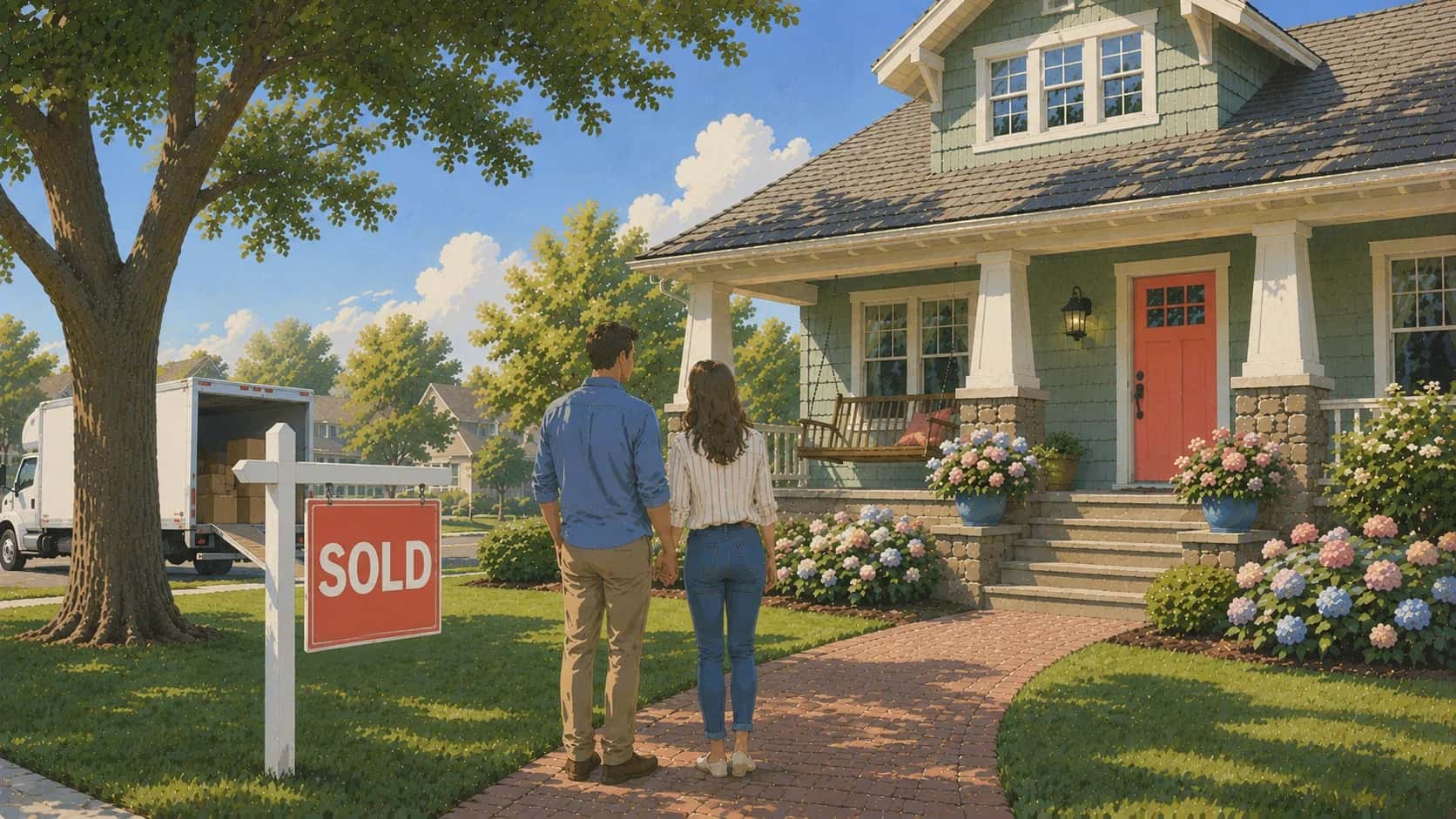
I'm buying a home.
Closing checklists move fast and the lender just wants a binder. But the policy you bind in week one is usually the policy you keep for years. Ten minutes of getting it right beats five years of renewal letters that do not quite fit.
What's actually happening.
There is a particular kind of closing week where the title company, the lender, and the realtor all want the same thing from you at the same time, and the homeowners binder is one item on a checklist of twelve. The natural temptation is to take whatever the lender suggests, get to closing, and figure out the rest later.
The thing the lender does not need to know, but you do, is that the policy you bind in week one is usually the policy you keep for five years. Re-shopping is allowed, common, and often free, but most people do not actually re-shop until something forces them to. So the configuration you sign in week one tends to be the configuration that catches a five-year-old hail claim.
The ten minutes of work on this page are about getting Coverage A right, choosing HO-3 versus HO-5 consciously, sizing the deductible for your actual cash position, and confirming the umbrella conversation happens before you sign, not after the trampoline arrives.
What changes inside the policy.
Three numbers on the dec page do most of the work. Coverage A is the rebuild cost of your house (not the purchase price, not the loan amount, not the appraisal). Coverage E is your liability limit, which carriers default to $100K or $300K and which is almost always too low. The deductible is the flat dollar or percentage you pay before the carrier responds. Get those three right and 80 percent of the policy is right.
The biggest single decision is HO-3 versus HO-5. HO-3 covers the structure on open peril and your contents on named peril. HO-5 covers both on open peril, which means the carrier has to prove an exclusion applies instead of you having to prove a covered peril caused the loss. The premium difference is small. The claims experience can be substantial. For most KC homes worth more than about $300K, HO-5 is the right default.
Roof settlement basis is the silent line item. Most carriers in KS and MO shift to actual cash value on roofs over 10 to 15 years; some will write replacement cost into older ages for a price. Ask the question before you sign, because changing the answer after a hail claim is impossible.
The coverages involved.
- Coverage A (dwelling)
The rebuild cost of the structure today. Roughly $200 to $300 per square foot in the KC metro at 2026 prices. Lenders sometimes set this to the loan amount or purchase price; both can be wrong. We size it from the actual rebuild math.
- Coverage E (personal liability)
Pays for harm you cause to others, on or off the property. Carrier defaults are $100K or $300K. We move it to $500K as the floor and pair with a $1M umbrella for most KC households.
- All-other-perils deductible
The flat dollar amount you pay before a non-wind claim. $1,000 is the cheapest premium; $2,500 saves 8 to 12 percent. The right answer depends on your cash position, not the salesperson's preference.
- Wind/hail deductible
Often a percentage of dwelling, not a flat dollar. On a $400,000 home, a 1 percent wind/hail deductible is $4,000 out of pocket. Confirm before binding; many KS and MO carriers default to percentage.
- Personal umbrella
A $1M (or $2M) liability layer over both home and auto. Roughly (call for current pricing). The cheapest liability dollar in personal lines; the single highest-value add at home closing.
- Water backup endorsement
Covers sump-pump failure and sewer/drain backup; standard HO-3 and HO-5 both exclude these by default. (call for current pricing) for $10K to $25K of limit. The single most-skipped coverage and one of the more common KC claims.
The stack we'd build.
- Homeowners form
HO-5. Open peril on both structure and contents. The carrier has to prove an exclusion, not the other way around.
- Personal liability (Coverage E)
$500K. Required underlying limit for most $1M umbrellas. The default $100K or $300K is too low for a homeowner.
- Personal umbrella
$1M. Over both home and auto. Roughly (call for current pricing). The single highest-value dollar at closing.
- Water backup endorsement
$25K. Sump-pump and sewer/drain backup. (call for current pricing). Standard HO-3 and HO-5 both exclude it.
The binder you sign for closing is not sacred. If your loan officer pushed a one-call binder to make the timeline, that is fine. You can re-shop in the first 30 to 60 days post-close without penalty. Most clients save 10 to 20 percent on the second look, and the underwriting is cleaner with a real closing date and a real survey.
What you cannot do cleanly post-close is re-form the policy from HO-3 to HO-5, swap roof settlement, or upsize Coverage A without a fresh underwriting pull. That is the case for getting the first binder right, not the case for never re-shopping.
Pitfalls.
- 01Setting Coverage A to the purchase price.
Purchase price includes the land, which is not insurable. Rebuild cost is what you actually need; in most KC neighborhoods that is 60 to 85 percent of purchase price for a typical lot.
- 02Defaulting to HO-3 to save $30 a year.
The premium difference between HO-3 and HO-5 is small. The claims-handling difference, especially on contents and on water claims, is substantial. For most KC homes over $300K, HO-5 is the right call.
- 03Skipping water backup.
Sump-pump failure and sewer-drain backup are excluded from base HO-3 and HO-5. The endorsement is (call for current pricing) for $10K to $25K of coverage. The single most-skipped coverage on closing-day binders.
- 04Forgetting the percentage wind/hail deductible.
On a $500K home, a 1 percent wind/hail deductible is $5,000 out of pocket on every hail claim. Worth knowing before the storm, not after.
- 05Skipping the umbrella because the kids are young.
Pool, trampoline, dog, teen driver in five years, neighbor at a party. Umbrella liability sits over both home and auto for (call for current pricing) and is the single highest-leverage dollar in personal lines.
- 06Underbuilding the dwelling on a remodel-planned house.
If you are mid-renovation in year one, Coverage A and replacement-cost factors need to reflect the finished house, not the as-purchased house. Otherwise the eventual claim payout falls short.
The timeline.
- Under contract.
T − 30 days. Send us the address, the inspection report (if available), and the closing date. We confirm the rebuild math, flag any underwriting questions, and pre-rate 3 to 4 carriers.
- Binder window opens.
T − 14 days. Lenders typically want the binder 7 to 14 days before closing. We bind the chosen carrier, confirm the HO-5 form, set the deductibles, and add the water-backup endorsement and umbrella.
- Policy live, lender satisfied.
Closing day. First-year premium is impounded by the lender or paid out of pocket. Coverage starts at the moment of closing. The dec page goes in your filing cabinet.
- Re-shop window.
+60 days. If you took a one-call binder under pressure, this is the natural time to re-quote across 20+ carriers. Most clients save 10 to 20 percent on the second look.
- First renewal.
+12 months. Coverage A inflates automatically. Re-confirm the discount stack. If the rate moved double digits without a claim, re-audit.
The lender just wants a binder. You should want a policy.
The fastest binder is rarely the right binder. Twenty minutes on a call before closing pays for itself the first time a hail claim comes in on a percentage deductible you did not know was percentage, or the first time a water-backup loss is denied for a missing endorsement. Most of what we do here is unglamorous, and most of it matters more than the premium number.
If you have a closing date and an address, send them over. We will quote 3 to 4 carriers, walk through HO-3 versus HO-5, size Coverage A from rebuild math, and have the binder ready in time for the lender. The call is on us; the dec page is yours to keep.
Nick RhodesAgency owner · Personal lines · NPN 19488203 · KS + MO licensed
Questions we answer often.
What's the right Coverage A for my purchase price?
HO-3 or HO-5: which form should I bind?
Should I bundle home and auto?
Is a percentage wind/hail deductible worth it?
What's the right umbrella limit for a new homeowner?
Can I re-shop after I close?
Do I need flood insurance in KC?
What if I'm planning a remodel in year one?
Related scenarios.
- My rates went up. No tickets, no claims.
Premium is up double digits but nothing changed on your end. What we would audit first.
- My teenager is driving.
The single biggest jump in household auto liability you will ever experience. The carriers know it.
- We're moving in together.
Two policies, two driving records, one address. When combining saves money, and when it costs more.